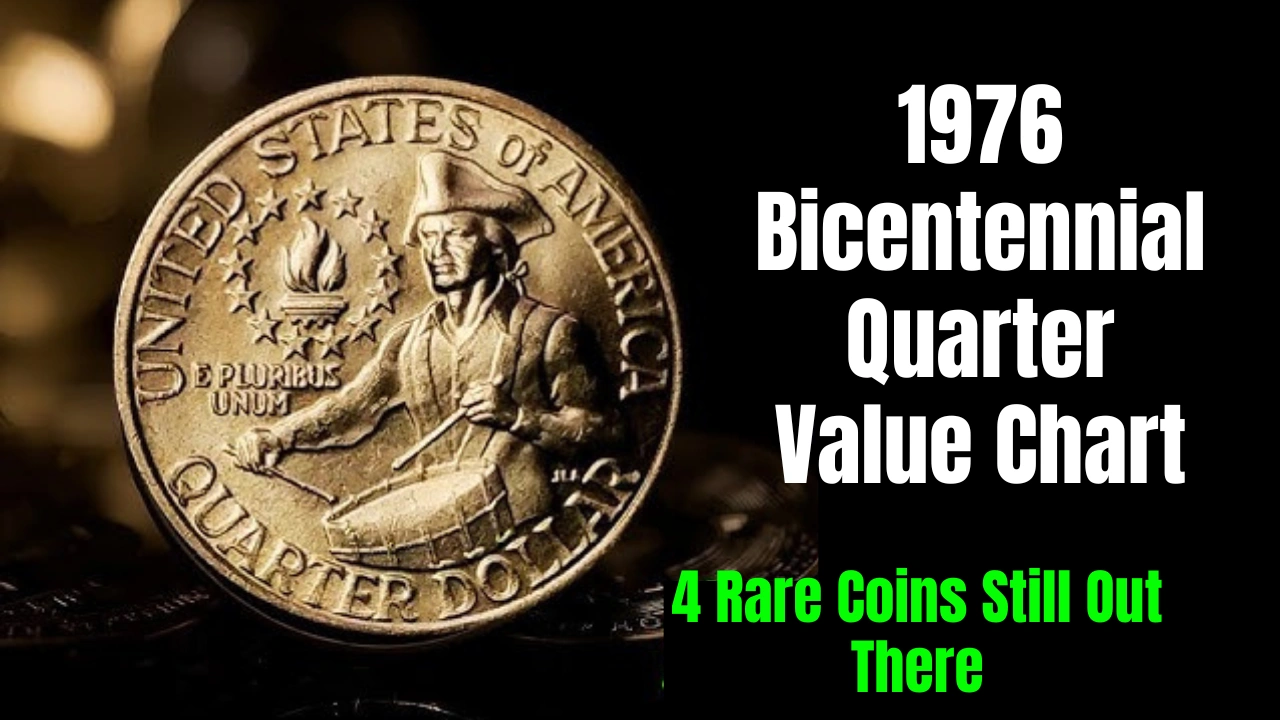
1976 Bicentennial Quarters: If you have ever looked at your spare change and noticed a quarter with the date 1776–1976, you might be holding something far more valuable than twenty-five cents. These 1976 Bicentennial Quarters are not just nostalgic pieces of history. Some of them are actually worth big money, depending on certain rare features. With collectors constantly searching for hidden gems, these quarters are gaining renewed interest in 2025.
Whether you are a casual collector, coin enthusiast, or someone hoping to make a surprising discovery in your pocket, this article will help you understand what makes certain 1976 Bicentennial Quarters so special. From silver-clad versions to rare mint errors, you will learn what to look for and how to spot a valuable one.
1976 Bicentennial Quarters
Among the most iconic coins in American history, 1976 Bicentennial Quarters were minted to honor the country’s 200th anniversary. But beyond their patriotic design lies a world of value that depends on rarity, composition, and condition. Some of the most sought-after examples include silver-clad versions that were not intended for circulation and error coins with visible mistakes in the minting process. Others have earned top-dollar simply because they have been preserved in pristine condition for nearly 50 years. With more people turning to collectibles in 2025, these quarters are seeing a resurgence in value and popularity.
Overview Table of Key Information
| Feature | Details |
| Total Coins Minted | Over 1.6 billion across all U.S. mints |
| Special Editions | Silver-clad versions from San Francisco Mint |
| Notable Errors | Doubled dies, off-center strikes, die cracks |
| Unique Design | Dual-date 1776–1976 with Drummer Boy reverse |
| Designer | Jack L. Ahr (reverse) |
| Collector Demand | Increasing in 2025 due to rising values and media coverage |
| Most Valuable Type | Silver-clad errors in high grade |
| Authentication Services | PCGS, NGC offer professional grading |
| Common Values | 25 cents for typical coins, $100 to $5,000+ for rare ones |
| Discovery Places | Pocket change, coin rolls, old jars, estate collections |
Rising Interest in Bicentennial Quarters
The Drummer Boy quarter is one of the most recognizable commemorative coins in the United States. While most people assume it is just another regular coin, collectors know that certain versions can be worth serious money. In 2025, the buzz around 1976 Bicentennial Quarters has picked up again, with online marketplaces and auctions reporting higher than usual sale prices for verified error coins and silver-clad examples.
This increase in attention is driven not only by nostalgia but also by the accessibility of these coins. Many collectors are still finding them in old rolls from the bank, inherited coin sets, or even in their change at the store. Because millions were minted, it is exciting to think a valuable one could be hiding in plain sight.
Characteristics That Make Certain 1976 Quarters Valuable
Not all 1976 Bicentennial Quarters are valuable, but a few stand out thanks to specific characteristics. Silver-clad versions, which contain 40 percent silver, were originally included only in collector sets. These coins were not supposed to circulate, but some ended up in the wild. Their metal content alone makes them more valuable.
Another factor that increases value is mint errors. Coins with doubled die errors, where parts of the design appear to have been stamped twice, can be worth hundreds. Off-center strikes, where the design is not properly aligned, are also highly desirable. Finally, condition plays a huge role. Uncirculated coins in near-perfect condition often sell for much more than worn-out versions.
Distinctive Exterior Design Features
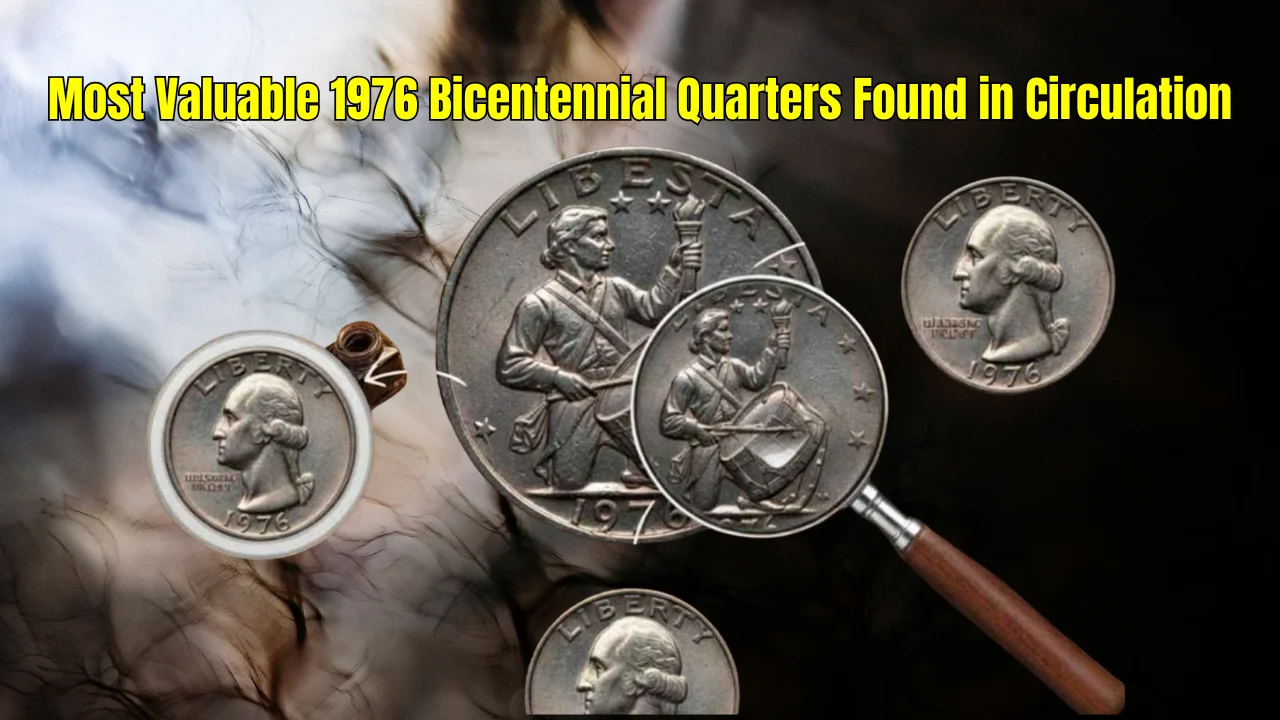
The design of the Bicentennial Quarter is what draws collectors in. On the reverse, the coin features a colonial drummer facing left, with a victory torch encircled by 13 stars in the background. The front has the standard portrait of George Washington, but what sets this coin apart is the dual-date, 1776–1976.
Collectors often look closely at the detail in the drummer’s uniform, the clarity of the torch, and the sharpness of the stars. These small elements help determine a coin’s grade and potential value. Quarters that show strong detail with minimal wear are always more appealing to serious collectors.
Key Interior Details That Influence Value
Beyond the surface, collectors analyze interior elements such as the coin’s strike, texture, and finish. For silver-clad versions, the edge often reveals a clean silver band rather than the familiar copper stripe seen in standard coins. This is a quick visual test many use to determine the coin’s metal content.
Additionally, serious collectors examine luster, which refers to the way light reflects off the coin. A coin with its original mint luster is often considered higher quality and may earn a better grade from certification services. High-grade examples have smoother fields and more precise details.
Minting Technology and Rare Variations
The minting process in the 1970s was not perfect, which led to the creation of a few rare error coins. Doubled dies were a common mistake, where the coin appears to have been stamped twice, creating a shadow-like appearance in the date or lettering. These coins are rare and often sell for hundreds or more.
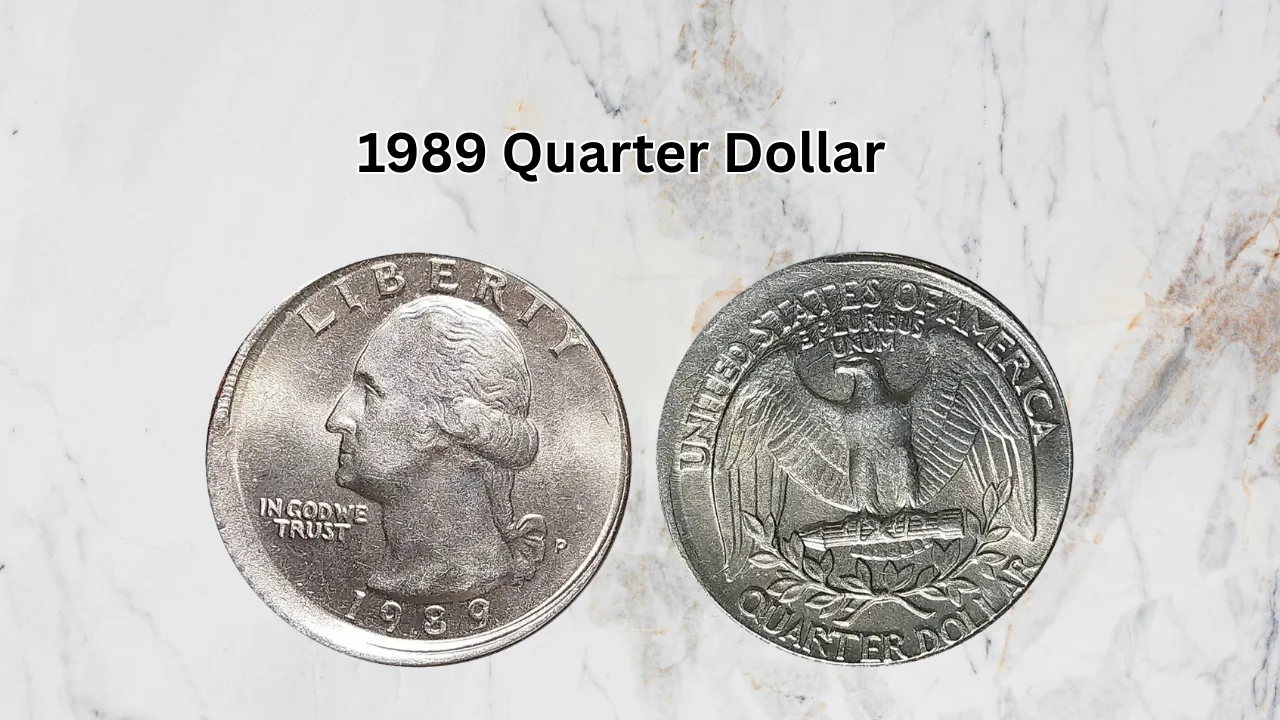
Another known variation is the off-center strike, where the coin was not properly aligned during minting. Some of these coins have missing parts of the design or look partially blank on one side. There are also die polishing errors, where certain design elements are missing due to over-polishing the dies.
Market Performance and Trends in 2025
As of 2025, the coin market has seen a noticeable uptick in interest in U.S. commemorative coins, particularly 1976 Bicentennial Quarters. High-grade examples and verified errors have consistently performed well at auctions, with some coins fetching four to five figures.
The popularity of online coin communities and social media has played a role in increasing demand. Posts about finding valuable quarters in everyday circulation often go viral, inspiring new collectors to begin their search. Certified coins from professional grading companies like PCGS and NGC are especially popular among investors.
Importance of Condition and Preservation
The condition of a quarter has a major impact on its value. Collectors use a 70-point grading scale, where 70 represents a flawless, mint-condition coin. While most 1976 Bicentennial Quarters found in circulation will have wear, those that have been carefully stored or never used at all can still achieve high grades.
Even slight details, like scratch marks or edge wear, can reduce a coin’s value. Coins that maintain their original shine, clear design, and strong edges are the most likely to sell for higher prices. Using protective holders or coin flips is essential for long-term preservation.
Authentication and Verification Essentials
Before selling or buying a potentially valuable quarter, it is important to have it professionally authenticated. Services like the Professional Coin Grading Service (PCGS) and Numismatic Guaranty Company (NGC) offer detailed grading and certification.
These services confirm not only a coin’s condition but also its metal content, strike details, and any known errors. A graded coin comes in a sealed holder with its official grade, which makes it easier to sell and provides peace of mind to buyers.
Collector Appeal and Long-Term Advantages
There is more to collecting 1976 Bicentennial Quarters than just monetary value. These coins have cultural and historical significance that resonates with collectors across generations. The patriotic design and the story behind the quarter make it a meaningful addition to any collection.
For beginners, these quarters are affordable and widely available. For advanced collectors, hunting for rare varieties or high-grade silver versions offers a rewarding challenge. As demand continues to grow, these quarters are likely to remain a smart and sentimental investment.
Pricing Expectations and Current Availability
While many Bicentennial Quarters remain worth only face value, certain types continue to surprise collectors with high sale prices. Silver-clad coins can sell for $10 to $50 even in lower grades, while rare errors and mint-state examples may fetch $500 to over $5,000.
The good news is that these coins are still out there. People are finding them in coin rolls from the bank, tucked away in drawers, or inside inherited collections. With a careful eye and a little luck, anyone could stumble upon a hidden gem.
FAQs
Check the coin’s edge. If there is no copper stripe and it appears solid silver, it might be a silver-clad version. Weighing the coin can also help confirm.
Coins with silver content, mint errors like doubled dies or off-center strikes, and those in mint condition are more valuable.
Yes, they are still found in circulation. Many people unknowingly spend them without checking for rare features.
If you believe you have a rare or high-grade coin, professional grading can verify its authenticity and increase its market value.
Check coin rolls, old collections, estate sales, or even your spare change. Valuable finds often show up in unexpected places.